
Breast Cancer

Breast Cancer Overview

Radiation therapy is an integral part of comprehensive care for breast cancer that we provide at Tennessee Oncology.

Your breast cancer care consists of a multidisciplinary team of cancer doctors (“oncologists”) that specialize in surgery (surgical oncology), medical oncology and radiation oncology. The term “radiation therapy” refers to the use of high-energy rays or particles to treat disease. When used for breast cancer, radiation therapy is most often used as adjuvant treatment (treatment after primary treatments such as surgery) and helps to kill tumor cells or inhibit their growth and division. The goal of radiation therapy is to kill any cancer cells that may be left in the breast or nearby lymph nodes after breast cancer surgery, and to reduce the chance of any remaining breast tissue evolving into cancer in the future. In more advanced breast cancer that is not eligible for surgery, radiation therapy may be used to control disease or to treat symptoms such as pain (palliative treatment).

For some cases such as non-invasive breast cancer (ductal carcinoma in-situ), radiation therapy is an option to discuss with your provider, whereas for others such as advanced or inflammatory breast cancer, radiation therapy is a standard, strongly recommended treatment.

Radiation may be beneficial in your situation based on many different factors including the size of the cancer, aggressiveness of tumor, margin status, your age, hormone receptor status, and if tumor cells are found in the blood vessels or lymphatic spaces around the cancer. Your radiation oncologist will discuss with you the specific details of your situation to determine recommendations for you.
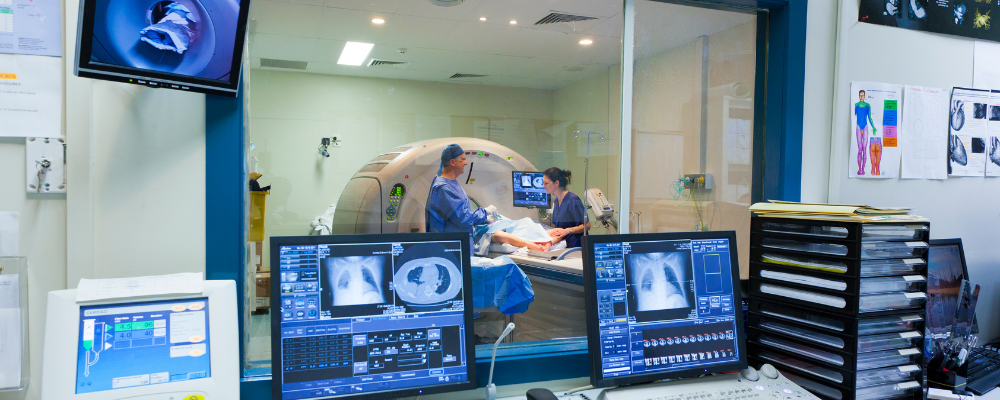

Radiation Care at Tennessee Oncology

Just as every person is different, every cancer is different and therefore your radiation plan is specifically tailored to your specific case. Your radiation oncologist will discuss with you the specific details of your situation to determine recommendations for you.

Potential Side Effects of Radiation for Breast Cancer

Potential side effects during radiation therapy for breast cancer are based on where we aim the bean, except for fatigue. The main side effects you can expect during treatment are skin reaction or irritation, breast tenderness and swelling, or nipple sensitivity.

You can learn more about potential side effects by speaking with your radiation oncology care team, and we will work with you to manage symptoms throughout your treatment.

Types of Radiation Therapy for Breast Cancer

There are many different types of radiation therapy, and your care team will speak with you about the recommended type for your case. Radiation therapy for breast cancer is most often “external beam” radiation therapy using a machine called a linear accelerator (LINAC) to deliver beams of radiation to a specific area of the body. Like CT scans, this type of radiation is not visible to the eye, and you are not radioactive at any time. The prescribed amount of radiation is delivered with high energy photons (also know as x-rays), electrons, or protons. Common radiation therapy techniques for breast cancer treatment are:

  • 3-dimensional conformal radiation therapy (3DCRT): This type of treatment utilizes multiple beams to deliver radiation to high risk areas of recurrence within the breast, chest wall and regional lymph nodes. Special planning software is utilized to ensure the radiation dose is delivered to the appropriate areas at risk and minimize exposure of surrounding healthy tissue.
  • Intensity-modulated radiation therapy (IMRT) or Volumetric-modulated arc therapy (VMAT): This type of treatment delivers radiation dose at many angles. The radiation beam is shaped with metallic leaves to precisely adjust the amount of dose that is delivered at each angle. This type of treatment may help reduce radiation therapy to nearby healthy tissue.
  • Proton therapy: Proton therapy delivers treatment at a specific depth in the body then stops with little energy remaining thereafter. For some cases, this helps further limit energy or damage to surrounding healthy tissue.

Each breast cancer patient is unique and during your consultation, your care team and radiation oncologist will discuss with you what to expect as part of your treatment plan and side effects that can occur.

Example Office Visit Calendar

The below example calendar is from a patient recommended for 4 weeks of radiation therapy.

Sunday Monday Tuesday Wednesday Thursday Friday Saturday
30 31 1 2 3 4 5
6 7 8 9 10 11 12
13 14 15 16 17 18 19
20 21 22 23 24 25 26
27 28 29 30 31 1 2
3 4 5 6 7 8 9
10 11 12 13 14 15 16
17 18 19 20 21 22 23

1. Consultation

2. CT Simulation

3. Treatment

  • Includes once-weekly visit with Physician
  • As needed visits for help with side effects.

4. Follow-up

  • Depends on the cancer type
Event Duration Notes
Referral
Consultation 1-1.5 hours To discuss your case, the recommended treatment, possible side effects, etc.
Simulation 1-1.5 hours Also called a “radiation planning CT,” this appointment is to determine the position for your body during treatment; often includes a CT scan.
Treatment Planning 3-7 business days While you’re waiting for treatment to start, your team of doctors and other key staff make design the machine instructions in software and verify its readiness for treatment.
Treatment Typically 3-7 weeks, once daily, Monday-Friday Individual treatments are typically quick (30-40 minutes in-office each day). At least once per week, you briefly meet your doctor for a check-up = “on-treatment visit” – the day of this visit varies by provider.
Follow-up Your doctor sees you back after treatment to help with any side effects, and to monitor for any sign of recurrence.

Additional Resources

Loading...

Request an Appointment

615-235-8700